
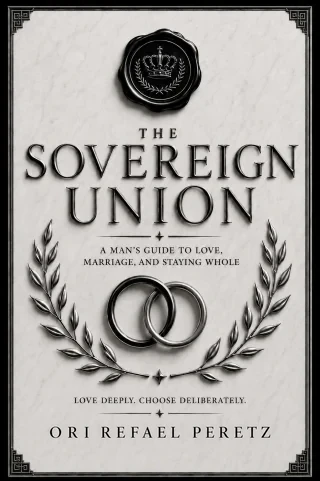
Reader Edition · Manuscript preview
A short excerpt from the Reader Edition manuscript. This preview is not a complete chapter or the final published edition.
You were taught the vows before you were taught the terms.
Most men know what they are supposed to say at the altar. Love her. Honor her. Protect her. Stay faithful. Build a family. Stand beside her until death.
Good. Mean every word.
You can want that life with your whole heart and still ask what the law will do with it. Your future does not become an unworthy concern because you love someone. Neither does hers.
This book begins where those two responsibilities meet.
A lifelong union is worth wanting and worth understanding. Love is covenant. Legal marriage is status. Protection is structure. Build a life worthy of the promise, protect both people, and decide whether civil marital status belongs in it.
I do not want to teach you to stand at a distance from love, calculating how little you can risk. I want a man to commit without sleepwalking, provide without disappearing, and ask a difficult question without mistaking it for betrayal.
The woman beside him deserves the same freedom. She should understand the promise before she organizes her future around it. A serious union has room for both people’s judgment.
Legal marriage carries consequences rarely spoken during the ceremony. They live in statutes, cases, property rules, tax rules, benefit programs, and the procedures that become urgent when life changes. The vows are yours. The legal defaults were written before you met.
I defend a serious covenant whose meaning does not depend on civil marital status, backed by deliberate protection rather than goodwill alone. I call the version that stays outside marital status a Sovereign Union. It is a framework, not a legal status, and wanting it does not make the law agree.
The broader sovereign method is the examination. It can lead to marriage, including marriage with a carefully negotiated agreement. If that path better serves both people, take it.
I am not against marriage, and I am not asking you to distrust women.
Trust concerns a person’s character. Understanding the law concerns consequences. Serious love has room for both.
Nor is this a way to receive a woman’s loyalty and sacrifice while leaving their cost on her side. If your shared life reduces her earning power or makes her dependent, the arrangement must protect her. Your security cannot depend on her exposure.
You will compare marriage under its financial defaults, marriage with an agreement, and a private structure outside marital status. Each needs appropriate planning. Some public benefits cannot be recreated. Some couples cannot afford or maintain the private alternative. Others consider legal marriage essential to their commitment.
Where the licensed path wins, I want it to win in these pages before reality makes it win in your life.
I am a law student, not an attorney. The Notes give you a research trail; the examples teach a method with disclosed assumptions. Neither can decide how current law applies to your life. The point is to make you a better participant in qualified advice, not to replace it.
I have a position. This book defends it. But I am not entitled to your agreement. So do not trust me. Test me.
A man who marries because everyone marries and a man who refuses because a slogan calls marriage a trap have made the same mistake. One inherited a yes. The other inherited a no.
Read the terms. Compare what both people receive and give up. Build the protection you promise. Then choose.
Ori Refael Peretz. The Sovereign Union, Reader Edition, Author’s Note. Manuscript preview.